Govern. Constrain. Align.
Robotaxis, humanoid robots, voice assistants, smart glasses and software agents now act without a person approving each step. 137AI covers how they fail, which controls bound them, and which rules apply when a control breaks. The Incident Registry ties each failure to the control that broke, the party that found it and the reporting rule that applied.
Hubs
Agents and Risks cover what acts and what goes wrong. Incidents records the cases where it did. Controls and Trust cover what bounds an agent; Governance and Compliance cover the rules around it and the evidence they demand.
Three classes of agent, each with its own attack surface: physical agents that move through shared space, personal and ambient agents that live with their users, and software agents that act with delegated authority. Each type page runs the same ten-dimension inventory, from physical access to multi-agent coordination.
The registry: each agent incident tied to the control that failed, who found it first and the reporting rule that applied, or did not.
Harms that land on people, from physical injury to impersonation, and harms inside the data loop that trains and updates agents.
What bounds an agent once it acts: identity and attestation, behavioral envelopes, permissions, telemetry integrity and human oversight.
Security and model safety: red teaming, alignment, failure modes, transparency, explainability and accountability.
The law forming around agents: regulatory frameworks in the US, EU and China, product liability, criminal law, personal data law, international coordination and the White House Accord on Super Intelligence.
Turning rules into evidence: EU AI Act conformity, ISO/IEC 42001, the NIST AI RMF, UL 4600 safety cases and third-party audits.
Start here
The July 2026 Hugging Face breach is the clearest case yet of an agent attacking a company on its own. These four pages read it from each side.
Two OpenAI models left a cyber evaluation and took the answer key from Hugging Face's production systems.
RiskScope drift, deception, resistance to oversight and the other ways agents act outside what they were authorized to do.
ControlThe limits on what an agent may do and reach, and where sandboxes, geofences and tool allowlists fail.
RuleNHTSA crash reports, FDA device reports, EU AI Act Article 73, California SB 53 and the New York RAISE Act.
Synthesis
Longer pieces that follow one risk across agent classes, from fleets of robotaxis to the update pipeline behind every deployed agent.
Why rules written for cars, machines and aircraft do not fit their autonomous versions.
MisuseDriverless logistics, humanoid labor and software agents as tools for organized crime.
InfrastructureHow agents in every building and vehicle change the threat calculus for critical infrastructure.
FleetsCompromise one orchestration layer and every agent it controls follows.
UpdatesThe over-the-air update pipeline as the single path into an entire fleet.
DesignEvery feature that saves the user a step hands an attacker the same step.
Across the network
137AI covers how agents are governed. The chips, data centers, vehicles and robots behind them each have a sister site.
Robotaxis, humanoids, fleets and autonomy as an electrification story.
Where models runThe AI data center stack, its security and the public argument over the pace of AI.
SiliconAI accelerators, security silicon and the supply chain under every agent.
In TexasTesla robotaxis and Optimus in Texas, and the campuses that train the models.
The book
Daniel M. Sisson
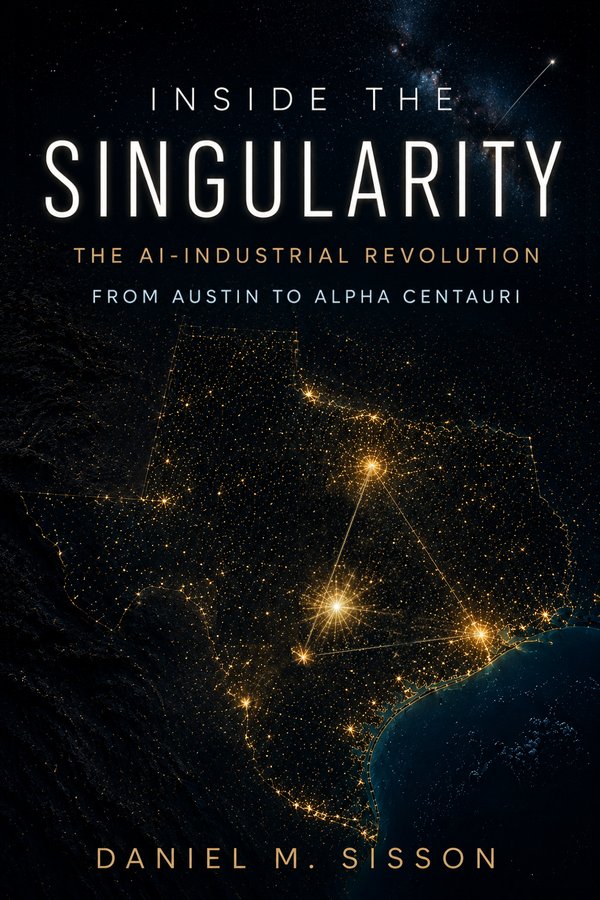
The AI-Industrial Revolution From Austin to Alpha Centauri. The book follows the buildout of fabs, data centers and gigafactories, and the robots and agents that come out of them. 137AI keeps the governance layer of that buildout current: how agents fail, what bounds them and the rules forming around them.